The UPSC Civil Services Examination (CSE) is India's most prestigious and competitive national-level examination conducted by the Union Public Service Commission (UPSC). It is widely recognized as one of the toughest exams in the world, designed to recruit highly qualified officers for the All India Services and Central Civil Services.
The 2026 recruitment offers 933 vacancies across multiple services including the Indian Administrative Service (IAS), Indian Police Service (IPS), Indian Foreign Service (IFS), and various other prestigious civil services. This examination is the gateway to a career of public service, policy-making, and national governance.
UPSC CSE Overview:
- Conducting Organization: Union Public Service Commission (UPSC)
- Total Vacancies (2026): 933 posts
- Examination Level: National
- Services Offered: IAS, IPS, IFS, IRS, IAAS, IRMS, and 20+ other services
- Eligibility: Bachelor's Degree (Graduate)
- Age Limit: 21–32 years (General), 21–35 years (OBC), 21–37 years (SC/ST)
- Selection Process: Prelims → Mains → Interview
- Exam Mode: Paper-based (Prelims & Mains) + Interview
- Total Marks: 2,025 (Mains) + 275 (Interview)
- Salary: ₹56,100 – ₹2,50,000+ (depending on service and rank)
- Exam Frequency: Once a year
- Success Rate: 0.078% (approximately 700–900 candidates selected annually)
Services Available Through UPSC CSE:
| Service Category | Services Included | Vacancies (2026) |
|---|
| All India Services | IAS, IPS, IFS | ~600+ |
| Central Civil Services (Group A) | IRS, IAAS, IRMS, IIS, IPoS, ITrS, IDES, IDAS, ICLS, IRPFS | ~300+ |
| Central Civil Services (Group B) | AFHQCS, DANICS, DANIPS, PONDICS, PONDIPS | ~30+ |
2026 Recruitment Highlights: UPSC CSE 2026 is recruiting for a total of 933 posts across multiple prestigious services. The notification was released on February 4, 2026, with the application deadline extended to February 27, 2026. The Preliminary examination is scheduled for May 23, 2026, making this a crucial year for aspiring civil servants.
Why is UPSC CSE Important?
- Gateway to India's highest administrative positions
- Opportunity to serve the nation at the highest level
- Excellent salary, benefits, and job security
- Prestige and social respect
- Influence in policy-making and governance
- International exposure (especially for IFS officers)
- Career growth and advancement opportunities
- Comprehensive benefits package including pension, medical, and housing
Note: UPSC CSE is conducted once a year. The examination process spans approximately one year from notification to final appointment. Candidates must meet all eligibility criteria at the time of application as well as at the time of document verification. The exam is known for its vast syllabus covering history, geography, polity, economy, science, and current affairs.
The 2026 examination timeline is crucial for candidates to plan their preparation strategy. The notification for UPSC CSE 2026 was officially released on February 4, 2026, with the application process running until February 27, 2026. The Preliminary examination is scheduled for May 23, 2026, providing candidates with approximately 3 months for final preparation.
Important Dates for 2026:
| Event | Date |
|---|
| Notification Release | February 4, 2026 |
| Application Start Date | February 4, 2026 |
| Application Last Date | February 27, 2026 (Extended) |
| Admit Card Release (Prelims) | May 2026 (Expected) |
| Preliminary Examination | May 23, 2026 |
| Prelims Result Declaration | June–July 2026 (Expected) |
| Mains Admit Card Release | July 2026 (Expected) |
| Mains Examination | August 21–27, 2026 (Expected) |
| Mains Result Declaration | November 2026 (Expected) |
| Interview (Personality Test) | December 2026 – February 2027 (Expected) |
| Final Result Announcement | March–April 2027 (Expected) |
Vacancy Distribution 2026:
- Indian Administrative Service (IAS): ~180 posts
- Indian Police Service (IPS): ~200 posts
- Indian Foreign Service (IFS): ~30 posts
- Indian Revenue Service (IRS): ~80 posts
- Indian Audit and Accounts Service (IAAS): ~50 posts
- Indian Railway Management Service (IRMS): ~50 posts
- Other Services: ~300+ posts
- Reserved Category Posts: SC/ST/OBC/EWS reservations applicable
Application Fee Structure:
| Category | Application Fee |
|---|
| General/OBC Candidates | ₹100 |
| SC/ST Candidates | Fee Exempt |
| Female Candidates | Fee Exempt |
| Persons with Disabilities (PwD) | Fee Exempt |
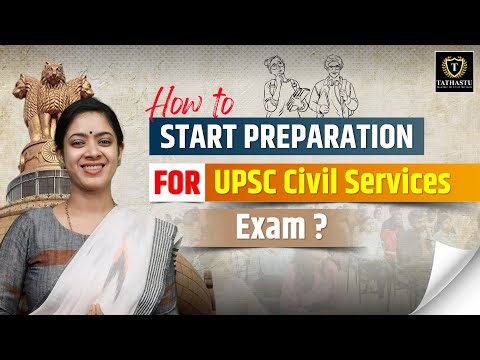
How to Prepare for UPSC CSE - Video Guide
▶
Candidates must apply online through the official UPSC website (upsc.gov.in). The application form requires personal information, educational qualifications, and service preferences. Candidates can make corrections in the application form during the specified correction window. It is advisable to apply well before the deadline to avoid technical issues.
The eligibility criteria are designed to ensure that only qualified and fit candidates are selected for prestigious civil service positions. The eligibility requirements include nationality, educational qualification, age limit, and physical standards. Understanding these criteria is essential before applying for the examination.
Nationality Requirements:
- For IAS, IPS, IFS: Only Indian citizens are eligible
- For Other Services: Indian citizen or subject of Nepal/Bhutan
- Dual citizenship is not permitted
- Persons of Indian origin (PIO) may be eligible under specific conditions
Educational Qualification:
| Qualification | Details |
|---|
| Minimum Education | Bachelor's Degree from a recognized university |
| Equivalent Qualification | Any Bachelor's Degree (B.A., B.Sc., B.Com., B.Tech., B.E., etc.) |
| Medium of Education | Any recognized medium (English, Hindi, Regional Languages) |
| Marks Requirement | No minimum marks requirement specified |
| Distance Learning | Recognized distance learning degrees are accepted |
| Final Year Candidates | Can apply if they will complete their degree by the Mains examination |
Age Limit 2026:
| Category | Age Limit (Years) | Maximum Attempts |
|---|
| General/EWS | 21–32 years | 6 attempts |
| OBC | 21–35 years | 9 attempts |
| SC/ST | 21–37 years | Unlimited attempts |
| Persons with Disabilities (PwD) | 21–42 years (category-wise) | 9 attempts (unlimited for SC/ST PwD) |
| Ex-Servicemen (General) | 21–37 years | 6 attempts |
Physical Standards:
- Candidates must be physically fit for the position
- Vision: Correctable to 6/6 in both eyes
- Hearing: Normal hearing in both ears
- No serious medical conditions that would prevent service
- Physical fitness test may be conducted for certain services
Disqualification Criteria:
- Candidates with criminal background or pending criminal cases
- Candidates with poor conduct or disciplinary action history
- Candidates with medical unfitness or serious health conditions
- Candidates with false or fraudulent documents
- Candidates who do not meet the age and educational requirements
- Candidates with communication disorders or serious hearing impairment
- Candidates who have been dismissed from government service
Important: Age is calculated as on August 1st of the examination year. Candidates must meet all eligibility criteria at the time of application as well as at the time of document verification. Any discrepancy or false information can lead to disqualification. Educational qualification must be from a recognized university. Final year candidates can apply but must complete their degree by the Mains examination.
The UPSC CSE exam pattern consists of three stages: Preliminary Examination (Prelims), Main Examination (Mains), and Personality Test (Interview). Each stage has a different structure, marking system, and syllabus. Understanding the complete exam pattern is crucial for effective preparation.
Stage 1: Preliminary Examination (Prelims):
| Paper | Subject | Questions | Marks | Duration |
|---|
| Paper I | General Studies | 100 | 200 | 2 hours |
| Paper II | CSAT (Aptitude Test) | 80 | 200 | 2 hours |
| Total | – | 180 | 400 | – |
Prelims Syllabus Overview:
General Studies Paper I (200 Marks):
- Indian History and Culture
- Geography of India and World
- Indian Polity and Governance
- Indian Economy and Development
- Science and Technology
- Environment and Ecology
- Current Affairs (National and International)
- General Knowledge
CSAT Paper II (200 Marks — Qualifying):
- Comprehension
- Interpersonal Skills and Communication
- Logical Reasoning and Analytical Ability
- Decision-Making and Problem-Solving
- General Mental Ability
- Basic Numeracy (Data Interpretation, Graphs, Tables)
- English Language Comprehension
Stage 2: Main Examination (Mains):
| Paper | Subject | Marks | Duration | Type |
|---|
| Paper A | Indian Language (Qualifying) | 300 | 3 hours | Descriptive |
| Paper B | English (Qualifying) | 300 | 3 hours | Descriptive |
| Paper I | Essay | 250 | 3 hours | Descriptive |
| Paper II | General Studies I | 250 | 3 hours | Descriptive |
| Paper III | General Studies II | 250 | 3 hours | Descriptive |
| Paper IV | General Studies III | 250 | 3 hours | Descriptive |
| Paper V | General Studies IV | 250 | 3 hours | Descriptive |
| Paper VI | Optional Subject I | 250 | 3 hours | Descriptive |
| Paper VII | Optional Subject II | 250 | 3 hours | Descriptive |
| Total (Qualifying Excluded) | – | 1750 | – | – |
Mains General Studies Syllabus:
- GS I: Indian Heritage, Culture, History, Geography
- GS II: Polity, Governance, Constitution, Social Issues
- GS III: Economy, Technology, Environment, Security
- GS IV: Ethics, Integrity, Aptitude, Public Administration
Stage 3: Personality Test (Interview):
- Duration: 20–40 minutes per candidate
- Total Marks: 275
- Conducted by UPSC panel at New Delhi headquarters
- Assessment of personality, communication skills, and suitability for civil service
Exam Strategy: The UPSC CSE requires a comprehensive understanding of diverse subjects. Focus on current affairs and recent developments. Practice answer writing for Mains examination. Develop communication skills for the interview. Time management is crucial in all stages. Consistency and regular revision are key to success.
The selection process is a comprehensive multi-stage procedure designed to select the most suitable candidates for prestigious civil service positions. The selection involves Preliminary Examination, Main Examination, Interview, and Document Verification.
Selection Process Stages:
| Stage | Examination | Details | Cutoff Criteria |
|---|
| Stage 1 | Preliminary Exam | 2 papers, 400 marks, Objective type | Merit-based cutoff |
| Stage 2 | Main Exam | 9 papers, 1750 marks (excl. qualifying), Descriptive type | Merit-based cutoff |
| Stage 3 | Interview | Personality test, 275 marks, 20–40 minutes | Merit-based selection |
| Stage 4 | Document Verification | Verification of certificates and eligibility | Eligibility verification |
Preliminary Examination Details:
- Objective-type examination with 180 questions
- Total marks: 400
- Duration: 2 hours per paper (4 hours total)
- Negative marking: 0.33 marks per wrong answer in Paper I; 0.66 marks in Paper II
- Candidates qualify based on merit and category-wise cutoff
- Approximately 10,000–12,000 candidates qualify for Mains
Main Examination Details:
- Descriptive-type examination with 9 papers
- Total marks: 1750 (excluding qualifying papers)
- Duration: 3 hours per paper
- Candidates must qualify in language papers (minimum 25% marks)
- Final merit is based on Mains and Interview combined
- Approximately 2,000–3,000 candidates qualify for Interview
Interview (Personality Test) Details:
- Conducted by UPSC panel at headquarters in New Delhi
- Duration: 20–40 minutes per candidate
- Total marks: 275
- Assessment of personality traits, communication skills, and suitability for civil service
- Questions may cover personal background, current affairs, and ethical issues
- Final selection based on combined merit of Mains and Interview
Document Verification:
- Verification of educational certificates (Bachelor's Degree)
- Verification of identity and address proof
- Verification of caste certificate (if applicable)
- Verification of service preference and other relevant documents
- Final stage before appointment
Service Allocation Process:
- Candidates are allocated services based on their merit rank and service preferences
- Services are allocated in order of merit
- Candidates indicate their service preferences during the Mains examination
- Final allocation considers merit, preferences, and service requirements
Important: Candidates must qualify all stages of the selection process to be appointed. The interview is crucial as it carries 275 marks out of 2,025 total marks (Mains + Interview). Communication skills and personality are assessed during the interview. Document verification is mandatory — any discrepancy can lead to rejection. The entire process spans approximately one year from notification to final appointment.
The salary package for civil service officers is highly competitive and offers excellent financial security along with numerous benefits. The salary structure varies depending on the service and rank, with IAS officers typically earning the highest salaries among civil services.
Pay Scale 2026 — 7th Pay Commission:
| Service | Entry Level Pay | Pay Level | Approximate In-Hand Salary |
|---|
| IAS | ₹56,100 – ₹2,50,000 | Pay Level-10 to 18 | ₹70,000 – ₹2,50,000+ |
| IPS | ₹56,100 – ₹2,50,000 | Pay Level-10 to 18 | ₹70,000 – ₹2,50,000+ |
| IFS | ₹56,100 – ₹2,50,000 | Pay Level-10 to 18 | ₹70,000 – ₹2,50,000+ |
| IRS | ₹53,100 – ₹2,18,200 | Pay Level-9 to 17 | ₹65,000 – ₹2,18,200+ |
| IAAS | ₹53,100 – ₹2,18,200 | Pay Level-9 to 17 | ₹65,000 – ₹2,18,200+ |
Comprehensive Benefits Package:
- Permanent Government Job with job security
- Pension benefits after retirement (50% of last drawn salary)
- Dearness Allowance (DA) — adjusted periodically
- House Rent Allowance (HRA) — varies by city
- Transport Allowance
- Medical and health insurance for self and family
- Leave benefits (Casual, Earned, Sick Leave, Maternity Leave)
- Housing facilities in some cases
- Educational benefits for children
- Gratuity on retirement
- Group Insurance Scheme
- Recreation and sports facilities
- Professional training and leadership development
Salary Breakdown Example (IAS Officer) — basic pay ₹56,100:
- Basic Pay: ₹56,100
- Dearness Allowance (DA): ~₹10,000–12,000
- House Rent Allowance (HRA): ~₹8,000–10,000
- Other Allowances: ~₹5,000–7,000
- Approximate In-Hand Salary: ₹79,100–85,100
Career Progression & Promotions:
| Position | Promotion Criteria | Experience Required | Salary Range |
|---|
| Deputy Secretary / Under Secretary | Merit and seniority | 5–7 years | ₹1,00,000 – ₹1,50,000 |
| Joint Secretary | Competitive examination | 10–12 years | ₹1,50,000 – ₹2,00,000 |
| Additional Secretary | Competitive examination | 15–18 years | ₹2,00,000 – ₹2,30,000 |
| Secretary to Government | Competitive examination | 20+ years | ₹2,30,000 – ₹2,50,000 |
Retirement Benefits:
- Pension: 50% of last drawn salary (minimum ₹9,000)
- Gratuity: One month's basic pay for each completed year of service
- Leave Encashment: Encashment of unused leave
- Family Pension: For dependents after retirement
- Medical Benefits: Post-retirement medical facilities
Career Prospects: Civil service offers excellent career growth opportunities. With dedication and performance, officers can progress to higher ranks with significant salary increases. The job provides financial stability, social respect, and the opportunity to serve the nation at the highest level. Officers can also take up postings in international organizations and diplomatic missions, especially IFS officers.
Effective preparation is the key to success in this highly competitive exam. With lakhs of candidates appearing for this examination, a well-planned study strategy and consistent effort are essential. Here are comprehensive preparation tips and resources to help you succeed in the UPSC CSE.
Preparation Timeline:
| Phase | Duration | Focus Areas |
|---|
| Phase 1: Foundation Building | Months 1–3 | Build basic knowledge; read NCERT books; understand exam pattern and syllabus |
| Phase 2: Main Preparation | Months 4–9 | Deep study of all topics; read standard books; make notes; solve practice questions |
| Phase 3: Revision & Mock Tests | Months 10–12 | Revise all topics; take regular mock tests; practice answer writing; improve weak areas |
Subject-wise Preparation Tips:
History:
- Focus on Indian history from ancient to modern times
- Study important events, rulers, and movements
- Understand the connection between history and current affairs
- Read NCERT books and standard history books
Geography:
- Study physical geography (landforms, climate, vegetation)
- Study human geography (population, economy, culture)
- Focus on Indian geography and world geography
- Use maps and atlases for better understanding
Polity and Governance:
- Study the Indian Constitution in detail
- Understand the structure of government (Executive, Legislature, Judiciary)
- Study important laws and policies
- Keep track of recent policy changes and reforms
Economy:
- Understand basic economic concepts
- Study Indian economy, inflation, and fiscal policy
- Follow economic news and policy announcements
- Understand budget and economic surveys
Science and Technology:
- Study basic science concepts (Physics, Chemistry, Biology)
- Focus on recent technological developments
- Understand space programs and scientific research
- Keep track of scientific breakthroughs
Current Affairs:
- Read newspapers daily (The Hindu, Indian Express)
- Follow news channels and online news portals
- Make notes on important events and developments
- Understand the connection between current affairs and static subjects
CSAT Preparation:
- Practice comprehension passages regularly
- Improve logical reasoning and analytical skills
- Practice data interpretation and graphs
- Solve previous year papers and mock tests
Mains Answer Writing:
- Practice writing answers within time limits
- Focus on structure and clarity
- Use diagrams and examples where appropriate
- Get feedback from mentors or coaching centers
Recommended Study Resources:
- Books: NCERT books, standard reference books, subject-specific books
- Online Platforms: Official UPSC website, YouTube channels, online coaching platforms
- Mock Tests: Take regular mock tests to assess preparation level
- Previous Year Papers: Solve previous year question papers
- News Portals: Read daily news from major news websites
- Study Groups: Join study groups for peer learning and discussion
- Coaching Centers: Consider joining reputed coaching centers for guidance
Do's and Don'ts:
| Do's | Don'ts |
|---|
| Study regularly and consistently | Don't skip topics or subjects |
| Take mock tests regularly | Don't rely on shortcuts only |
| Revise topics regularly | Don't neglect current affairs |
| Stay updated with current affairs | Don't waste time on irrelevant topics |
| Maintain a balanced diet and sleep | Don't study late into the night |
| Practice time management | Don't attempt all questions randomly |
| Focus on quality over quantity | Don't memorize without understanding |
Preparation Strategy: Start your preparation at least 12–18 months before the exam. Divide your preparation into phases: Foundation (3–4 months), Main Preparation (5–6 months), Revision and Mock Tests (3–4 months). Allocate time for all subjects equally. Maintain consistency and discipline throughout your preparation journey. Focus on understanding concepts rather than memorization. Practice answer writing regularly for Mains preparation. Stay updated with current affairs throughout your preparation.