Overview
▼ What is NIOS? Understanding the National Institute of Open Schooling
The National Institute of Open Schooling (NIOS) is a national-level board of education in India, controlled and managed by the Government of India. It was established by the Ministry of Education (formerly the Ministry of Human Resource Development) of the Government of India on November 12, 1989.
NIOS is recognized as the largest open schooling system in the world, with a cumulative enrolment of over 4.13 million learners during the last five years. The institution operates through a network of five departments, 23 regional centres, two sub-regional centres, two NIOS cells, and more than 7,400 study centres (AIs/AVIs) across India and abroad.
NIOS functions as an autonomous organization under the Ministry of Education, Government of India, similar in status to other national educational boards such as the Central Board of Secondary Education (CBSE). It provides flexible and accessible education to students who cannot attend regular schools, including working professionals, homemakers, and those seeking to improve their qualifications.
| Parameter | Details |
|---|---|
| Full Name | National Institute of Open Schooling |
| Abbreviation | NIOS |
| Former Name | National Open School (NOS) |
| Establishment Date | November 12, 1989 |
| Headquarters | Noida, Uttar Pradesh, India |
| Official Languages | Hindi and English |
| Parent Organization | Ministry of Education, Government of India |
| Current Chairman | Dr. Akhilesh Mishra |
| Current Director | Dr. Rajiv Kumar Singh |
| Total Students (2024) | 112,000+ (Active) |
| Cumulative Enrolment (5 years) | Over 4.13 million learners |
| Annual Enrolment | Around 350,000 learners |
| Regional Centres | 23 across India |
| Study Centres | More than 7,400 (AIs/AVIs) |
| Official Website | nios.ac.in |
▼ NIOS Class 10 Exam 2026: Key Highlights and Information
The NIOS Class 10 examination (Secondary Course) is conducted twice a year: Block I in April–May and Block II in October–November. The exam is designed to provide flexible learning options for students who cannot attend regular schools.
| Feature | Details |
|---|---|
| Exam Name | NIOS Secondary Course (Class 10) |
| Conducting Body | National Institute of Open Schooling (NIOS) |
| Exam Frequency | Twice a year (April–May and October–November) |
| Block I Practical Dates (2026) | March 17 – April 1, 2026 |
| Block I Theory Dates (2026) | April 10 – May 6, 2026 |
| Exam Mode | Offline (Written) |
| Exam Duration | 3 hours (2:30 PM – 5:30 PM) |
| Total Marks per Subject | 100 marks |
| Minimum Subjects Required | 5 subjects (including 1–2 languages) |
| Maximum Subjects Allowed | 7 subjects |
| Application Fee (Male) | INR 1,800 |
| Application Fee (Female) | INR 1,450 |
| Result Declaration | June 2026 (Expected) |
| Pass Percentage (2025) | Over 90% |
▼ Exam Structure and Pattern
The NIOS Class 10 examination follows a structured pattern with comprehensive assessment of student knowledge. Students must select subjects from Group A (Languages) and Group B (Academic Subjects).
Subject Selection Requirements
| Requirement | Details |
|---|---|
| Minimum Subjects | 5 subjects (1–2 languages from Group A + 3–4 from Group B) |
| Maximum Subjects | 7 subjects (can take up to 2 additional subjects) |
| Group A (Languages) | Hindi, English, Urdu, Sanskrit, Bengali, Marathi, Telugu, Gujarati, Kannada, Punjabi, Assamese, Nepali, Malayalam, Odia, Arabic, Persian, Tamil, Sindhi |
| Group B (Academic) | Mathematics, Science & Technology, Social Science, Economics, Business Studies, Home Science, Psychology, Indian Culture & Heritage, Accountancy, Painting, Data Entry Operations, Music, Veda Adhyan, Sanskrit Vyakaran, Bharatiya Darshan, Sanskrit Sahitya |
| Vocational Subjects | Typewriting (Hindi/English/Urdu), Carpentry, Solar Energy Technician, Bio Gas Technician, Laundry Services, Bakery & Confectionery, Welding Technology |
Exam Pattern Details
| Component | Details |
|---|---|
| Minimum Subjects | 5 subjects (1–2 languages from Group A + 3–4 from Group B) |
| Maximum Subjects | 7 subjects (can take up to 2 additional subjects) |
| Exam Mode | Offline (Written) |
| Exam Duration | 3 hours (2:30 PM – 5:30 PM) |
| Total Marks per Subject | 100 marks |
| Question Types | Very Short, Short, Long, and Essay Type |
| Negative Marking | No |
| Reading Time | Additional 15 minutes to read question paper |
| Passing Marks | 33% in each subject |
▼ Eligibility Criteria for NIOS Class 10
To apply for the NIOS Secondary Course (Class 10), learners must meet the following eligibility criteria:
| Eligibility Criteria | Details |
|---|---|
| Minimum Age | 14 years of age with valid proof |
| Educational Qualification | Must have cleared Class 8th or equivalent |
| Self-Declaration | Can provide self-certificate stating "I have studied enough to pursue secondary course" |
| Previous Study | Learners who studied at secondary level elsewhere can seek admission to complete or improve performance |
| Nationality | Indian citizens and NRIs eligible |
| No Age Upper Limit | No maximum age restriction |
| Application Process | Online through official NIOS website |
| Documents Required | Age proof, Educational documents, Aadhar Card, Passport-size photograph |
▼ Important Dates and Exam Schedule 2026
The following are the important dates for the NIOS Class 10 examination 2026. Students should mark these dates to ensure they don’t miss any crucial deadlines:
| Event | Date | Details |
|---|---|---|
| Block I Practical Exams | March 17 – April 1, 2026 | For applicable subjects |
| Hall Ticket Release (Practical) | February 2026 | Available online |
| Theory Exams Start (Block I) | April 10, 2026 | First theory paper |
| Theory Exams End (Block I) | May 6, 2026 | Last theory paper |
| Hall Ticket Release (Theory) | March 2026 | Available online |
| Result Declaration | June 2026 | Expected announcement |
| Theory Exams (Block II) | October–November 2026 | Scheduled dates |
| Block I Admission Start | April 1, 2026 | Online registration opens |
| Block I Admission End | November 30, 2026 | Last date for registration |
| Block II Admission Start | December 1, 2026 | For October session |
| Block II Admission End | March 15, 2027 | Last date for registration |
▼ NIOS Class 10 Subject Options and Streams
NIOS Class 10 offers diverse subject options across different streams. Students have the flexibility to choose subjects based on their interests and career goals. The subjects are divided into Group A (Languages) and Group B (Academic Subjects).
Group A: Language Subjects
Students must select 1 or 2 languages from the following options:
- Hindi
- English
- Urdu
- Sanskrit
- Bengali
- Marathi
- Telugu
- Gujarati
- Kannada
- Punjabi
- Assamese
- Nepali
- Malayalam
- Odia
- Arabic
- Persian
- Tamil
- Sindhi
Group B: Academic Subjects
Students must select 3–4 subjects from the following options:
| Subject Category | Available Subjects |
|---|---|
| Science & Mathematics | Mathematics, Science & Technology, Physics, Chemistry, Biology |
| Social Studies | Social Science, History, Geography, Political Science, Economics |
| Commerce | Business Studies, Accountancy, Economics |
| Vocational | Data Entry Operations, Carpentry, Welding, Bakery & Confectionery, Laundry Services |
| Humanities | Indian Culture & Heritage, Psychology, Philosophy, Home Science |
| Arts | Painting, Music (Hindustani/Carnatic), Sanskrit Vyakaran, Sanskrit Sahitya |
▼ Result Declaration and Passing Criteria
The NIOS Class 10 result is declared on the official website (results.nios.ac.in). Results are typically announced approximately seven weeks after the last date of examinations. Students can check their results using their enrollment number and date of birth.
Passing Standards
| Criteria | Details |
|---|---|
| Passing Requirement | Minimum 33% marks in each subject |
| Overall Passing | Minimum 33% aggregate marks |
| Result Declaration Timeline | Approximately 7 weeks after final exam |
| Result Website | results.nios.ac.in |
| Last Year Pass % | Over 90% |
| Grading System | A+, A, B+, B, C, D, E (Letter Grades) |
How to Check NIOS Class 10 Result 2026
- Visit the official NIOS results website (results.nios.ac.in)
- Click on ‘Check Result’ or ‘View Result’ link
- Enter your enrollment number and date of birth
- Click ‘Submit’ to view your result
- Download and save your result
- Take a printout or screenshot for future reference
On-Demand Examinations (ODE)
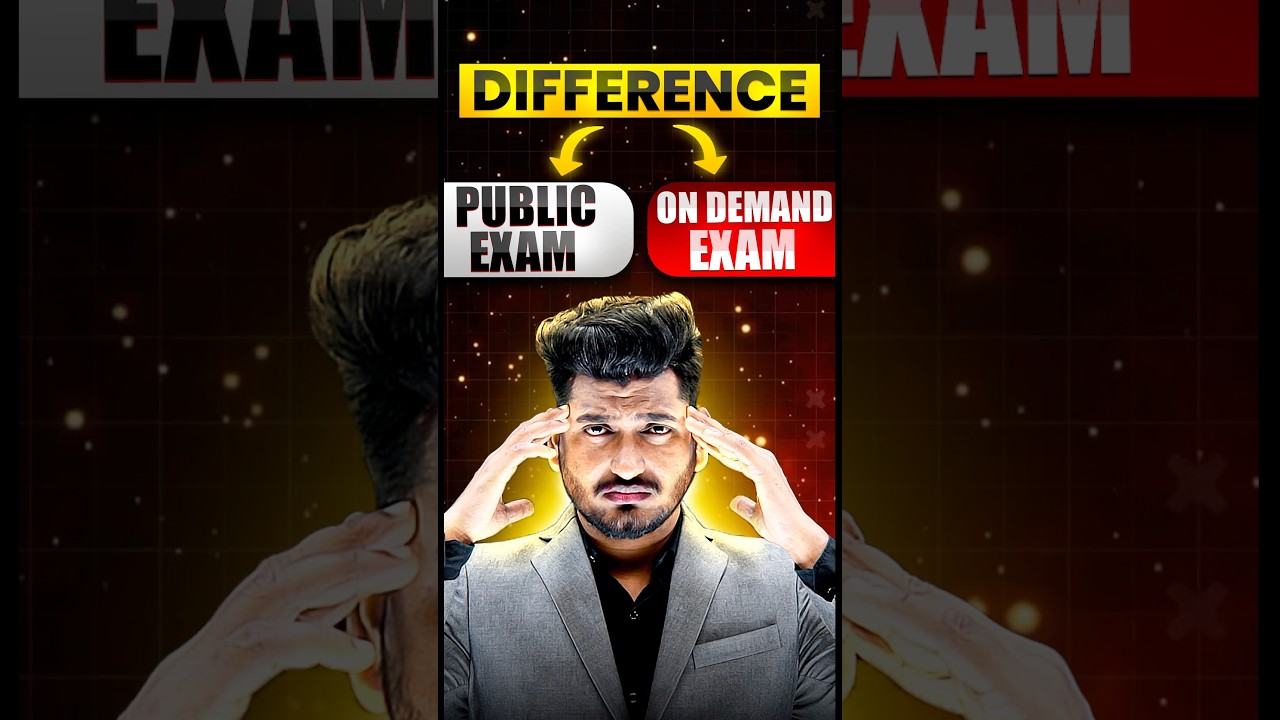
NIOS also offers On-Demand Examinations (ODE) for eligible learners. These exams can be taken throughout the year (except during April–May and October–November public exams). ODE provides additional flexibility for learners who want to complete their course at their own pace.
Improvement Exams
Students who are not satisfied with their performance can appear for improvement exams. The improvement exam result will replace the previous result if it is better. Students must apply for improvement exams within the specified time period.
Official Result Websites
- results.nios.ac.in
- nios.ac.in